


What not do on Social Media when you are a Newcomer or applying to immigrate to Canada.
Newcomers and immigration applicants should treat social media like part of their application and professional profile: anything public can and may be checked by Canadian immigration officers and employers, and serious inconsistencies or inappropriate content can cause refusals or lost job offers. The goal is not to be perfect, but to avoid red flags, misrepresentation, and content that damages your credibility or judgment
Hare simple Tips of what you should not do What not do on Social Media when you are a Newcomer or applying to immigrate to Canada.
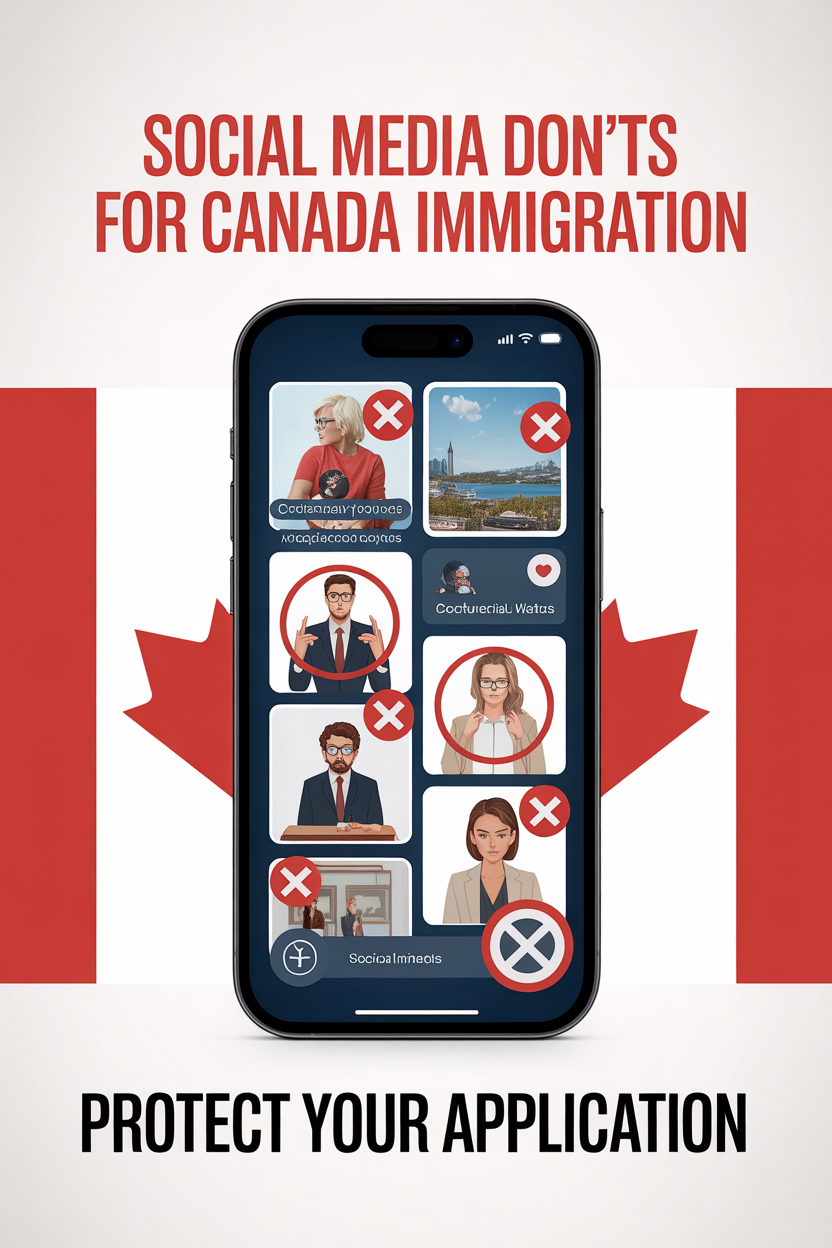
1. Do not post information that contradicts your application
IRCC and CBSA can compare what you write in your forms with what appears on LinkedIn, Facebook, X, Instagram and other public profiles. Inconsistent job dates, different job titles, different marital status, or education history can raise doubts about honesty and may lead to refusals or misrepresentation findings.
Do not list fake employers, fake job titles, or wrong dates online.
Do not claim to be single online if you declared a spouse in your immigration file, or vice versa.
Do not exaggerate your work experience on LinkedIn compared to your official documents.

2. Social media for newcomers: Do not share hateful, violent, or extremist content
Part of admissibility to Canada includes security and criminality screening, and public online activity can be taken into account. Public praise for violence, extremist groups, terrorism, hate speech, or calls to harm others can be seen as a serious risk to Canadian safety and values.
Do not post or share support for extremist organizations or violence, even as a “joke”.
Do not post racist, sexist, homophobic, or other hateful comments or memes.
Do not join or publicly support groups that promote hate or violence.

3. Do not ignore privacy settings or leave old posts unchecked
Public content is easier for officers, border agents, and employers to see, and there is evidence that social media is used for background checks and to verify information. Old posts, photos, or comments can appear in searches and may give a negative or misleading picture of who you are today.
Do not leave everything “public” if you are not comfortable showing it to a visa officer or employer.
Do not forget to review old posts, tags, and photos that show illegal activity, hateful comments, or risky behavior.
Do not allow strangers to tag you in inappropriate content without checking your settings.

4. Do not engage with immigration scams or “guaranteed visa” offers
The Government of Canada has warned about fake social media pages and people pretending to be immigration consultants or government officials. These scammers can take your money, steal your information, and even post your details online in unsafe ways.
Do not send money to people on WhatsApp, Facebook, or Instagram who promise “guaranteed PR” or “special programs”.
Do not share passport scans or personal documents by DM with unknown pages.
Do not trust anyone who claims to be IRCC staff using personal social media accounts.

5. Do not post content that shows illegal or risky behaviour
Employers and agencies often look for red flags such as illegal drug use, crime, or behavior that could damage a workplace or community. Even if something was “in the past,” public photos or videos can raise questions about judgment and reliability.
Do not post or share photos of illegal activities or clearly breaking the law.
Do not brag online about cheating on exams, lying to authorities, or committing fraud.
Do not publicly discuss plans to work illegally in Canada or to overstay a visa.

6. Do not be unprofessional or disrespectful online
Many Canadian employers screen social media to assess professionalism, communication style, and whether you might be a good fit for their team. Very aggressive, insulting, or constantly negative posting can make employers and networks reluctant to help or hire you.
Do not attack people in the comments, especially about politics, religion, or identity.
Do not use your real name profile to engage in online bullying or harassment.
Do not share constant complaints about previous employers, teachers, or clients.
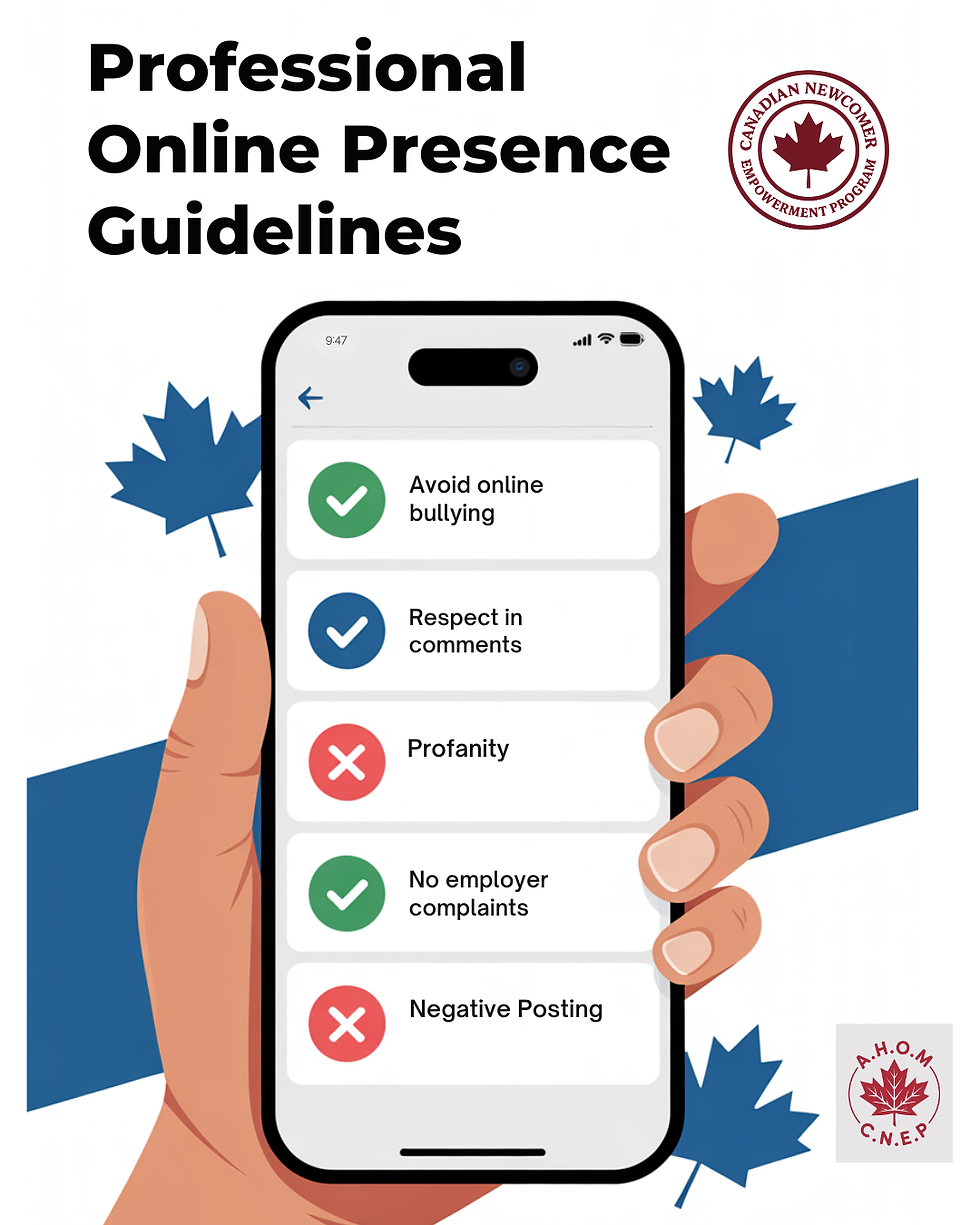
7. Do not share false or misleading information about Canada
False stories and myths about immigration and newcomer benefits are widely shared online and can harm public opinion. Liking and sharing obvious misinformation can also affect how others view your judgment and reliability as a professional or future citizen.
Do not spread rumors about guaranteed money, free housing for all immigrants, or secret programs.
Do not share unverified posts that attack immigrants or other groups.
Do not rely on random pages for immigration rules; always check official or trusted legal sources.

8. Do not forget that employers are also watching
Surveys show that about two‑thirds of Canadian employers review candidates’ social media, and many have rejected applicants because of what they discovered. This applies to newcomers just as much as Canadian‑born candidates.
Do not assume only LinkedIn matters; employers may check whatever appears when they Google your name.
Do not use a professional profile photo on LinkedIn and then allow public posts elsewhere that completely contradict the professional image you want to present.
Do not ignore your digital footprint when preparing for job searches or networking in Canada.

Your newcomer journey is too important to navigate alone. CNAP’s practical, plain‑language workshops give you step‑by‑step guidance on housing, finances, employment readiness, family adjustment, and avoiding common newcomer mistakes, so you can feel confident and prepared from day one in Canada. Sign up for one of our workshops today to reserve your spot and start turning information into a clear, action‑ready plan for you and your family.
When it comes to social media and Canadian immigration, the goal is simple: do not post anything that conflicts with your application, promotes hate or illegal activity, or damages the professional image you will need to study, work, and thrive in Canada. A cleaner, more intentional online presence makes it easier for officers, landlords, and employers to see you as a trustworthy, well‑prepared newcomer—not a risk.
To keep getting practical tips like this—and to make sure your digital footprint, housing plan, and settlement strategy all work together—connect with CNAP, the Canadian Newcomer Adjustment Program.
Sign up for the CNAP newsletter to receive checklists, workshops, and step‑by‑step guidance that help you “Start Strong and Settle Smart” before and after you arrive in Canada.


Comments